
Introduction
Last month my mother got her annual blood work back. Twelve pages. Columns of numbers, abbreviations she’d never seen before, asterisks marking things high or low. She sat there trying to make sense of it for ages before asking me what hemoglobin A1C was and if 6.2 meant trouble. My mother taught primary school for thirty years. She doesn’t give up on understanding things easily.
But medical reports aren’t written for patients. They’re written for other doctors. And when you’re holding a piece of paper with numbers about your own body and you can’t tell if you should be worried or relieved, that disconnect is frustrating.
A good medical report summarizer app should fix this. Not replace doctors, but translate the paperwork so you actually understand what your own health data is telling you.
The Real Problem Nobody Talks About
I’ve watched enough relatives stare at reports to notice the pattern. It’s not that people can’t understand health information. It’s that the formatting is hostile to understanding.
Labs love their abbreviations. WBC, RBC, MCV, MCH, PLT. If you’re not in healthcare, these look like airport codes. Then you’ve got numbers, some flagged high, some flagged low, and a reference range that changes depending on your age and gender and sometimes the lab itself. No context. No explanation of what it connects to or why it matters.
For younger people with internet literacy, you can piece it together. But for elderly patients? For people whose first language isn’t English? The system makes it unnecessarily hard. That’s millions of people every year holding pieces of paper they can’t interpret, making health decisions based on incomplete understanding or just filing it away and hoping someone calls if it’s serious.
What an AI-Powered Medical Report Summarizer App Actually Does
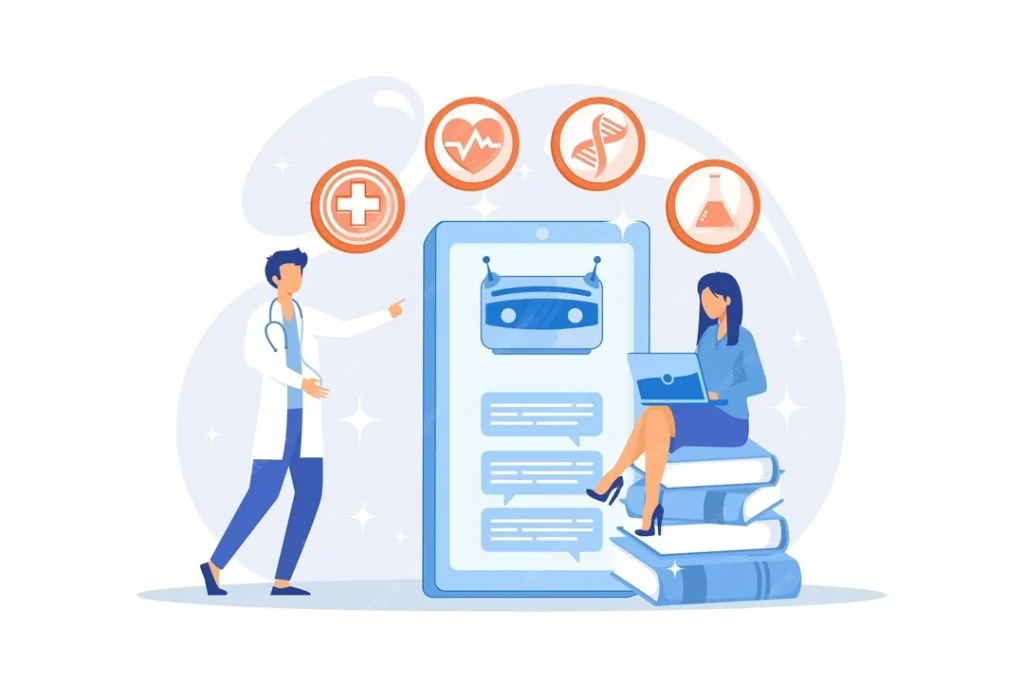
TinyBit’s Report Checker feature was built to close that gap. You snap a photo of your report or upload the PDF. The app pulls the text using OCR, reads it, and spits back a summary that’s actually written in normal language. What each result means. What’s worth paying attention to. What’s probably fine.
It’s not making things simpler by leaving stuff out. It’s just explaining it properly.
So instead of staring at “HbA1c: 6.2% (High)” and wondering what that actually means for you, you get told straight: your average blood sugar over three months is a bit high, you’re in the prediabetic zone, talk to your doctor about diet and checking it again soon.
That’s useful. That’s what people need when they’re trying to understand their own health.
The report OCR app for patients approach matters because not everyone has digital reports. Most people still get paper. Being able to snap a photo and have the app read it removes a huge barrier, especially for older users who aren’t going to manually type out lab results.
Who This Actually Helps
Elderly patients are the obvious group. My grandmother keeps old medical reports in a kitchen drawer, maybe five years’ worth stuffed in there. Ask her about her cholesterol and whether it’s gotten better or worse, and she’ll just shrug. It’s not that she isn’t interested. Nobody ever sat down and walked her through what the numbers meant in a way she could remember afterwards. An AI app for elderly health reports where she snaps a photo and gets back something she can actually read and understand would change how she deals with doctor visits completely.
But it’s not just the elderly. It’s anyone managing chronic conditions who has to track multiple markers over time. It’s parents trying to understand their kid’s test results. It’s people in their thirties getting their first warning signs and not knowing whether to panic or ignore it.
The medical report summary tool approach works because it meets people where they already are, confused and holding a piece of paper, and gives them clarity without requiring them to become medical experts first.
Different from Just Googling Everything
Everyone’s done this. You see a high reading, you Google it, and within three clicks you’ve convinced yourself you have six different diseases. The internet is terrible for health anxiety because it gives you information without context.
What TinyBit’s AI health report reader does differently is it looks at your actual numbers, not generic symptoms. It explains what’s flagged and why, in the context of your specific results. It doesn’t spiral into worst-case outcomes. It just says “this is what this means, here’s what’s elevated, here’s what you should ask your doctor about.”
That specificity is the difference between useful and panic-inducing.
Organizing So You Can Actually Track Trends
Health data piles up fast. You have reports from different labs, different doctors, different years. Trying to compare your cholesterol from this year to last year means digging through files or hoping the clinic has it on record.
TinyBit lets you organize and summarize health data in one place. You upload your reports, the app categorizes them, and you can see trends over time without manually tracking anything. For families managing elderly parents’ health from a distance, this is especially useful. Everything’s in the app, summarized, easy to reference when you’re on a call with a doctor.
It Won't Replace Your Doctor
Let me be clear. TinyBit’s report feature is not diagnostic software. It doesn’t tell you what disease you have. It doesn’t prescribe treatment. It doesn’t replace professional medical judgment.
What it does is make the information you already have more accessible to you. When you go into a doctor’s appointment actually understanding your last set of labs, the conversation is different. You ask better questions. You’re a participant in your own care instead of just a recipient of instructions.
The AI-powered medical report summarizer app layer is there to simplify complex medical reports so that the human part, the doctor-patient conversation, can actually be productive.


