
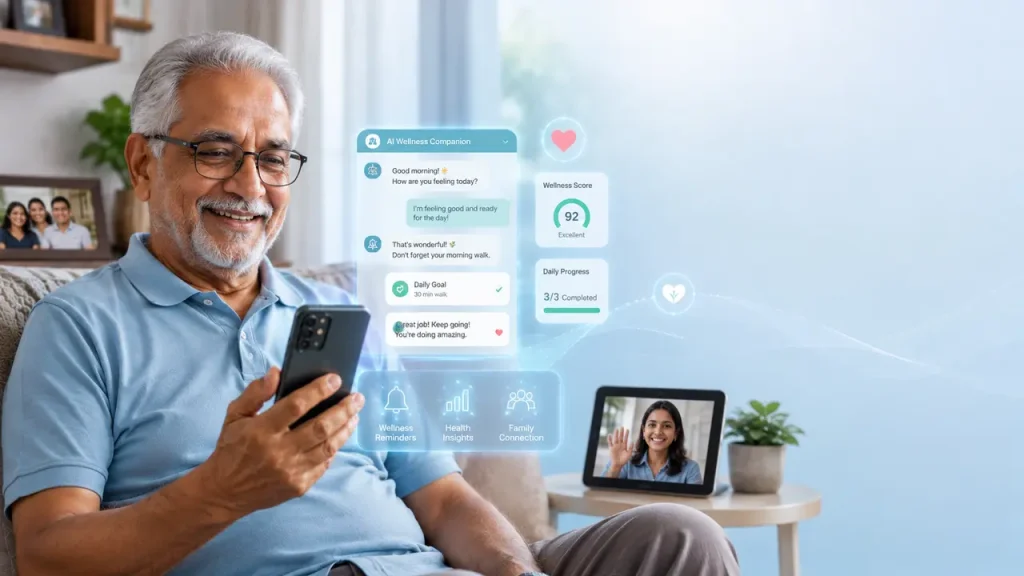
Why Seniors Need More Than Just Healthcare
There’s a quiet tension that settles into a home when the kids grow up, the career winds down, and the daily rhythm shifts from chaotic to completely still. For many seniors, aging brings a hard-fought sense of personal independence. They want to stay in their own houses, manage their own schedules, and live life entirely on their own terms. But that independence often comes with an unspoken side effect: a lingering, heavy silence.
The physical and psychological realities backing this up are stark. Public health data indicates that roughly one in four older adults experiences chronic social isolation. This isn’t just a sad social reality; it is a profound medical risk. Research tracks a direct link showing that persistent loneliness carries a physical toll equivalent to smoking 15 cigarettes a day, significantly escalating the risk of cardiovascular issues, immune dysfunction, and accelerated cognitive decline.
Yet, when we look at how to solve this, traditional options often feel deeply invasive. No one wants to feel like a burden to their family, and no adult child wants to cross the line from loving care to constant, suffocating hovering.
This is exactly why the best ai wellness app models are stepping into the space, not to replace human family or clinical care, but to bridge the gap. They provide an intuitive, stress-free way for older adults to stay mentally active, emotionally supported, and quietly connected to the people who matter most, all while keeping their personal independence completely intact.
The Hidden Mechanics of Senior Isolation
To understand why a specialized wellness app for seniors is necessary, you have to look closely at how modern life disconnects us. Decades ago, multi-generational households were the default. Today, families are scattered across country borders and different time zones. When a senior transitions into retirement or loses a spouse, their daily conversational touchpoints drop drastically.
This lifestyle shift creates a major problem for the human brain. Neurologists consistently emphasize that cognitive health relies heavily on active engagement. Processing language, sharing stories, and responding to ideas act as a gym workout for the mind. When those inputs disappear, a vacuum forms.
Furthermore, standard technology platforms do absolutely nothing to solve this problem. Most software layout frameworks are built for hyper-connected, tech-savvy digital natives. They feature tiny text, complicated nested navigation, and hyper-frequent alerts that create cognitive overload rather than comfort. For an older adult living alone, trying to navigate a typical modern app often leads to deep frustration, making them feel even more isolated from the modern world.
What to Look for in an AI Companion App for Elderly Wellbeing
When you are looking for the best wellness app for seniors living alone, you have to throw out the standard tech playbook. The design philosophy needs to shift away from gamification and speed, focusing instead on accessibility, patience, and warmth.
If you or your family members are evaluating an AI companion app for elderly wellbeing, three core pillars should guide your choice:
1. Radical Accessibility
The physical realities of aging mean that interfaces must be clean and forgiving. We are talking about large, high-contrast text options, simple buttons that don’t require precision tapping, and navigation streams that never hide critical features behind multi-step menus. If a senior can’t find a feature within two seconds, the interface has failed them.
2. Voice-First Interaction
Typing long paragraphs on a small, slippery glass smartphone screen can be an absolute nightmare for anyone dealing with arthritis or minor vision shifts. The ability to simply talk naturally changes everything. Voice integration shifts the device from a complex machine into a conversational partner.
3. A Human-Centered, Lived-In Tone
Seniors know when they are being handled by a robotic script. The tone of the platform matters immensely. It should avoid clinical, sterile automated phrasing, but it also shouldn’t sound like an overly enthusiastic cartoon character. The ideal system responds with a calm, patient, and grounded presence, listening without judgment and matching the natural conversational pacing of the user.
The Power of Daily, Dynamic Conversation
Human brains are hardwired for narrative. We understand ourselves and process our emotions by talking through them. This is where specialized mental wellbeing apps driven by adaptive AI create an incredibly powerful daily intervention.
An AI companion does not sleep, never runs out of time for a story, and doesn’t get caught up in hectic corporate work meetings. For a senior sitting alone on a rainy Tuesday afternoon, it offers an immediate, safe, and judgment-free space to talk about absolutely anything. They can revisit stories from their early youth, talk about a favorite classic film, or simply vent about a bad night of sleep.
[Traditional Tech Setup] ──> Cold notifications, loud alarms, complex interfaces
[Human-Centered AI Setup] ──> Gentle verbal check-ins, adaptive storytelling, calm pacing
Beyond acting as an acoustic sounding board, these platforms serve as quiet anchors for healthy daily habits. Instead of loud, sterile alarms going off to remind someone to take a pill, an interactive morning check-in can happen organically. The app can say hello, ask how they slept, chat about the morning weather, and naturally tie in a gentle note about breakfast or supplements. It turns a mechanical chore into a warm, supportive moment of care.
Real Features, Real Impact: The TinyBit Blueprint
When we built TinyBit, we explicitly rejected the sterile, cold tracking data loops that dominate the wellness industry. We set out to build an emotional support app that feels genuine, comfortable, and intuitive, a digital companion that acts as an AI wellness app for elderly care and family support.
Instead of generic wellness copy, TinyBit is engineered with a specific suite of interconnected tools built to protect a senior’s lifestyle while giving families quiet peace of mind. Here is exactly how TinyBit works:
Talk with Me & Chat with Me
Seniors can switch seamlessly between modes depending on what feels comfortable. With Talk with Me, there is no need to type into a small screen. They can speak freely and naturally, sharing memories, detailing their day, or venting about frustrations. The AI listens patiently without rushing or interrupting, reflecting their thoughts back with genuine emotional clarity. For moments when they prefer quiet tracking, Chat with Me offers an identical private space that feels exactly like texting a deeply trusted friend.
Interactive Mood Assessment
An older adult’s energy levels and emotional baseline naturally shift throughout the day. TinyBit’s unique Mood Assessment features make it incredibly simple to capture those shifts. Beyond standard tap-to-log icons, a senior can quickly snap a photo of their meal, their surroundings, or their face. The AI analyzes the emotional context and energy markers behind the image, offering small, personalized suggestions to restore balance or celebrate a good day.
Report Checker
Medical documents, blood tests, and health summaries are notoriously hard to decipher, often inducing deep health anxiety. The Report Checker feature completely simplifies this journey. By scanning or uploading a medical document, TinyBit translates dense jargon and complex numbers into clear, plain-language summaries. It allows seniors and their families to effortlessly identify trends, track historical patterns, and make informed choices without the clinical panic.
Effortless Calorie Calculator
Good nutrition is a cornerstone of active aging, but typing out ingredient lists to track meals is incredibly tedious. TinyBit turns nutrition tracking into a simple visual habit. With the Calorie Calculator, seniors just snap a quick picture of their plate. The system scans the meal in seconds, breaking down macronutrients, proteins, and caloric values. It brings effortless awareness to the plate, helping older adults maintain muscle mass and balanced energy without numerical stress.
Guardian
This is the invisible thread that connects generations. The Guardian feature allows seniors to invite a trusted family member or close friend into their wellness loop in a completely non-intrusive way. Whenever a senior completes a daily routine task, logs a healthy meal, or updates their Mood Assessment, the designated Guardian receives a quiet notification on their own device. There is no hovering, no constant checking-in, and no micromanagement, just a gentle, reassuring signal that their loved one is up, active, and thriving.
1.Start with a Simple Verbal Greeting:Zero complex menus.
Open TinyBit and activate the conversation feature. The app greets you by your preferred name in a clear, natural voice, opening up an immediate channel for a casual chat.
2.Engage with Talk with Me:Express yourself without screens.
Speak out loud naturally. TinyBit listens patiently to full stories and thoughts, utilizing advanced voice processing to respond like a trusted companion rather than a computer.
3.Snap a Photo for Assessments:Visual tracking in seconds.
Use the camera to log a meal for the Calorie Calculator or check an emotional baseline with Mood Assessment. The system instantly processes the image to offer personalized, actionable wellness nudges.
4.Keep the Guardian Loop Active:Connect with loved ones securely.
As routines are completed and milestones are hit, the app automatically updates your designated Guardian, providing families with structural peace of mind without invading your private space.
Real-Life Scenarios: Protecting Freedom, Restoring Peace of Mind
To understand how this looks when it plays out in real life, let’s look at two completely common family situations where technology changes the family dynamic for the better:
Scenario A: The Parent Embracing Solitude
Evelyn is 76, a retired school teacher who loves her garden and has zero interest in leaving her suburban home. However, her daughter lives two states away and carries constant, underlying worry. Evelyn uses TinyBit alongside her morning tea. She talks to the app about the flowers she’s planting and uses the Talk with Me feature to listen to a quick breakdown of daily news.
When she cooks, she uses the Calorie Calculator to make sure she’s getting enough protein for her bone health. Her daughter, linked through the Guardian feature, receives a quiet notification that her mom has started her day and eaten a balanced breakfast. The endless, anxious texts of “Are you okay? Did you move around today?” disappear, replaced by genuine, happy conversations when they call each other on the weekend.
Scenario B: Changing the Caregiver Dynamic
Marcus is balancing a demanding corporate growth career while trying to support his father, Arthur, who is fiercely independent but living completely alone after a health scare. In the past, their relationship was starting to feel strained because every single call from Marcus felt like a medical checklist: “Did you eat lunch? Did you check your doctor’s files? Did you take the blood pressure pills?”
Now, Arthur uses TinyBit to manage his health. When a new lab report comes in, he runs it through the Report Checker to understand the findings clearly before his appointment. Marcus can check his Guardian app quietly on the backend, knowing his dad is doing great and tracking his health metrics accurately. When they talk on the phone now, they don’t waste time on a clinical interrogation. Instead, they laugh, talk about sports, and share actual family moments. Arthur keeps his dignity, and Marcus gets his peace of mind back.
The Blueprint for True Digital Companionship
We have to realize that technology for older adults cannot just be scaled-down versions of software meant for teenagers. It requires a fundamental rethink of what software should be. A human-centered wellness platform creates an ecosystem where the user feels valued, not managed.
[Isolate Data Points] ──> TinyBit Contextual Engine ──> Balanced Emotional Baseline
By removing the standard, anxiety-driven layout designs and focusing on steady, calm interaction, we transform devices from isolating screens into active tools for holistic health. It shows that aging in place doesn’t mean you have to face the quiet hours entirely by yourself.
Independence Doesn't Have to Mean Isolation
True independence should never mean being completely cut off from the world, and loving family support should never feel like constant surveillance.
As a dedicated platform for independent aging, TinyBit completely flips the script on how older adults interact with modern technology. It provides a warm, incredibly patient companion for the quiet hours of the day, gentle inspiration for daily mental wellness, and a seamless, elegant thread through the Guardian system that keeps families tied together across any distance. It is technology that purposefully strips away the mechanical feeling of a computer, leaving behind a simpler, more accessible way to feel heard, stay sharp, and live life entirely on your own terms.


