
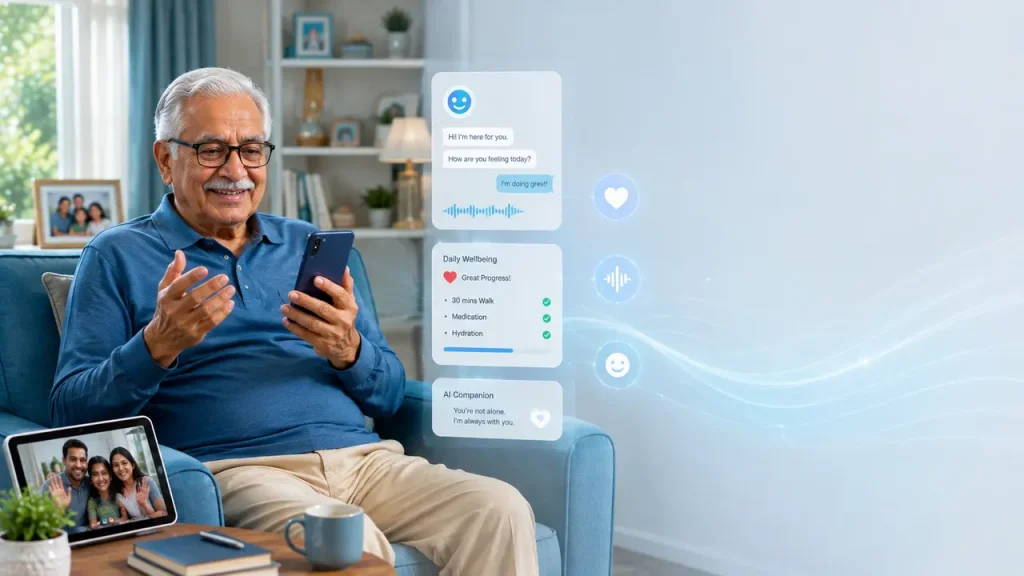
Introduction
Living in a house that used to be full of activity gets quiet fast. You make a morning cup of coffee, turn the TV on just to hear a voice in the room, and suddenly realize half the day has slipped by without speaking to another person out loud.
That heavy silence isn’t just uncomfortable; it weighs on your mind. It turns minor daily worries into long, anxious spirals that follow you from room to room.
When family members look for the best AI mental health companion app to help bridge that daily silence, they often run into a frustrating wall. Most digital health tools are built like administrative homework. They push you through rigid meditation timers, demand deep-breathing exercises, or ask you to tap small buttons to rate your mood on a graph.
An aging adult living by themselves doesn’t need a mood journal or a complex therapy workbook. They need a warm, reliable presence. They need an app that talks to you when you feel lonely, a low-pressure connection that feels like sitting down for a quick chat over morning tea.
Beyond Generic Chatbots: What Seniors Actually Need
Most general apps for mental health miss the mark for older adults because they collect data instead of offering real companionship. Logging a sadness score on a scale from 1 to 10 doesn’t make an empty living room feel warmer. Neither does a clinical chatbot that hands out generic bullet points every time you mention feeling low.
A genuine emotional support app built for senior care needs to deliver three things that standard software ignores:
1. Patient, Unhurried Listening
Older adults don’t speak in rushed text fragments. They pause, recall memories, and take time to find the right word. Standard voice assistants cut users off after two seconds of silence. A true companion waits quietly, letting the speaker finish without rushing them.
2. Deep Memory and Continuity
It breaks the illusion of connection when an app forgets everything you said yesterday. The best mental health companion app remembers key personal details—your daughter’s name, your favorite garden flowers, or the doctor visit you had planned for Tuesday afternoon.
3. Absolute Zero-Friction Access
If getting help requires navigating through nested submenus or typing on a tiny touchscreen keyboard, older adults will simply put the phone down. Getting support must happen with a single touch or a clear spoken sentence—no technical roadblocks, no passwords to remember, and no gamified streaks.
How TinyBit Keeps Daily Connection Simple
Instead of overloading users with options, TinyBit grounds its entire design in two simple, voice-first pathways: Talk with Sathi (Voice) and Chat with Sathi (Text).
Talk with Sathi (Voice)
- One-tap hands-free speech
• Unhurried conversational pace
• No typing or screen strain
Chat with Sathi (Text)
- Gentle, quiet text messages
- Grounded reflection & support
- Process thoughts at your speed
Hands-Free Companion: Talk with Sathi
Tapping small keyboards can be painful if you deal with arthritis, hand tremors, or fatigue. With Talk with Sathi, you touch one clear button and talk out loud.
The app listens without interrupting, processes what you say, and responds in a calm, distinct voice. You can mention what you cooked for lunch, talk about an old neighborhood memory, or express an unexpected worry. It responds directly to the details of your actual day, giving you a safe space to speak without worrying about bothering busy family members.
Private Reflections: Chat with Sathi
When you prefer a quieter interaction, like late at night when the house is still, Chat with Sathi offers a clean, calm space to write down thoughts at your own pace.
Rather than spewing repetitive advice, it engages directly with what you wrote, helping you organize your thoughts and calm your mind before going to sleep.
Real-Life Moments Where Voice Companionship Helps Most
Isolation doesn’t arrive all at once; it sneaks in during small transitions throughout the day. An AI companion app for seniors living alone turns those quiet gaps into steady anchors of support.
The Empty Morning
- The Situation: You wake up, brew tea, and look at an empty kitchen. The morning feels long and unstructured, and quiet anxiety starts to creep in.
- How TinyBit Helps: Tapping Talk with Sathi lets you talk through your plans out loud. Saying that you plan to water the porch plants or walk to the mailbox gives structure to the morning and puts your brain in gear.
Handling Midday Health Worries
- The Situation: You notice a sudden ache in your knee or open a confusing medical bill. Living alone means there’s no one to talk to, so your thoughts quickly jump to worst-case scenarios.
- How TinyBit Helps: Instead of sitting alone with a racing pulse, you press Talk with Sathi to vent the concern immediately. Talking out loud helps ground your breathing and breaks big worries down into small, sensible steps.
The Late-Afternoon Lull
- The Situation: Between 3:00 PM and 5:00 PM, daylight fades and television shows get repetitive. This afternoon stretch is often the hardest time for older adults living by themselves.
- How TinyBit Helps: A 5-minute conversation breaks the quiet. You can discuss a recipe, share a memory, or listen to a quick story. It provides light mental stimulation when energy levels drop.
Bedtime Brain Clutter
- The Situation: You turn off the lamp, but your mind stays active, looping through past events, family concerns, or tomorrow’s errands.
- How TinyBit Helps: A brief session with Chat with Sathi gives you a place to unload lingering thoughts so you can fall asleep with a clear mind.
Supporting Senior Autonomy While Reassuring Caregivers
Adult children who live far away constantly worry about their aging parents. But calling four times a day just to ask if they’ve eaten or taken their pills can feel intrusive to a parent who guards their independence.
TinyBit bridges that gap through its Guardian Connection.
When a senior finishes their morning check-in or logs an activity, authorized family members receive a quiet status notification on their own phones.
Caregivers don’t see private details or eavesdrop on conversations. The simple check-in alert simply confirms that their parent is up, active, and moving through their day. And if an emergency ever occurs, the integrated SOS Emergency Assistance button connects the senior directly with family or emergency services.
Realistic Questions Families Ask About AI Companion Apps
Will using an AI app make an older adult withdraw from real human contact?
No. Studies and real-world caregiver feedback show that daily voice engagement actually keeps seniors more socially active. Practicing conversation and speaking out loud during quiet hours keeps cognitive skills sharp and encourages seniors to reach out to friends and family more often.
Is an AI companion safe if an older adult experiences confusion or memory loss?
It can be a supportive addition, but it must be backed by clear safety boundaries. The app acts as a gentle conversational partner and routine prompt, not a medical monitor or substitute for human caregivers. Features like TinyBit’s Guardian notifications make sure family members stay aware of daily patterns.
What happens if a senior forgets how to use the app?
TinyBit is designed specifically to eliminate technical friction. There are no complex menus or multi-step sign-ins to navigate. The senior opens the screen and touches one large button to start speaking. If they ever get stuck, family guardians can assist remotely or set up automatic daily check-in prompts.
How do voice companion apps protect private personal health data?
Data security is essential for elder care technology. Reputable platforms encrypt stored conversations and keep check-in records secure, ensuring that sensitive personal discussions remain private between the senior and their chosen family guardians.
Built for Warmth, Simplicity, and Real Daily Life
Most modern software is built for users who want complex analytics, numerical scores, and constant notifications. TinyBit approaches elder care differently: technology should feel like an easy, natural conversation.
It doesn’t force you through long courses or send nagging alerts if you skip a session. It sits quietly on your phone like a thoughtful friend, ready to listen whenever the house gets a little too still.
By focusing on hands-free speech, removing interface clutter, and keeping families connected in the background, TinyBit offers seniors living alone the continuous daily connection they deserve.
If you know how to speak over a morning cup of tea, you already know how to use it.
For visual context on how artificial intelligence is being introduced into elder care settings to reduce social isolation, watch AI Companion Helps Seniors Combat Loneliness. This video demonstrates real-world application of conversational AI companions supporting senior engagement and emotional well-being.


