
Introduction
Most emotional problems do not begin with strong feelings. They begin with confusion.
A reaction feels bigger than expected. A decision feels harder than it should. A conversation leaves behind a strange aftertaste that cannot be explained. The emotion itself is not the issue. The lack of clarity is.
This is where the best mood tracking app becomes useful, not as emotional logging, but as emotional translation.
Emotions influence decisions long before they are noticed
Emotions shape choices silently. What feels like procrastination is often emotional resistance. What looks like distraction is sometimes quiet overwhelm. What sounds like irritation may actually be mental fatigue asking for space.
When emotions remain unnamed, they leak into behavior. People react without understanding why. Over time, this erodes confidence in personal judgment. Decisions start feeling impulsive or misaligned.
daily mood app for free brings emotions into language. Once emotions are named, they stop operating in the background.
Emotional memory is unreliable, patterns are not
Human memory edits emotions. Good days get remembered as better. Bad days feel worse in hindsight. Neutral days disappear completely. This makes emotional self assessment inaccurate.
Tracking moods creates an external record. Not perfect, but honest. Over time, this record becomes more reliable than memory. Patterns emerge that could never be reconstructed mentally.
This is how emotional understanding begins. Not through insight, but through accumulation.
Why emotional clarity matters more than positivity
Many people confuse emotional wellbeing with feeling good and that is not how it works.
Wellbeing comes from clarity not just constant positivity. Knowing what is being felt even when it is uncomfortable, reduces internal friction. Unclear emotions drain more energy than those difficult ones.
Mood tracking helps you to distinguish between sadness, fatigue, stress, boredom and emotional overload. These states require different responses. Without clarity, the wrong response gets applied.
What separates surface tracking from real understanding
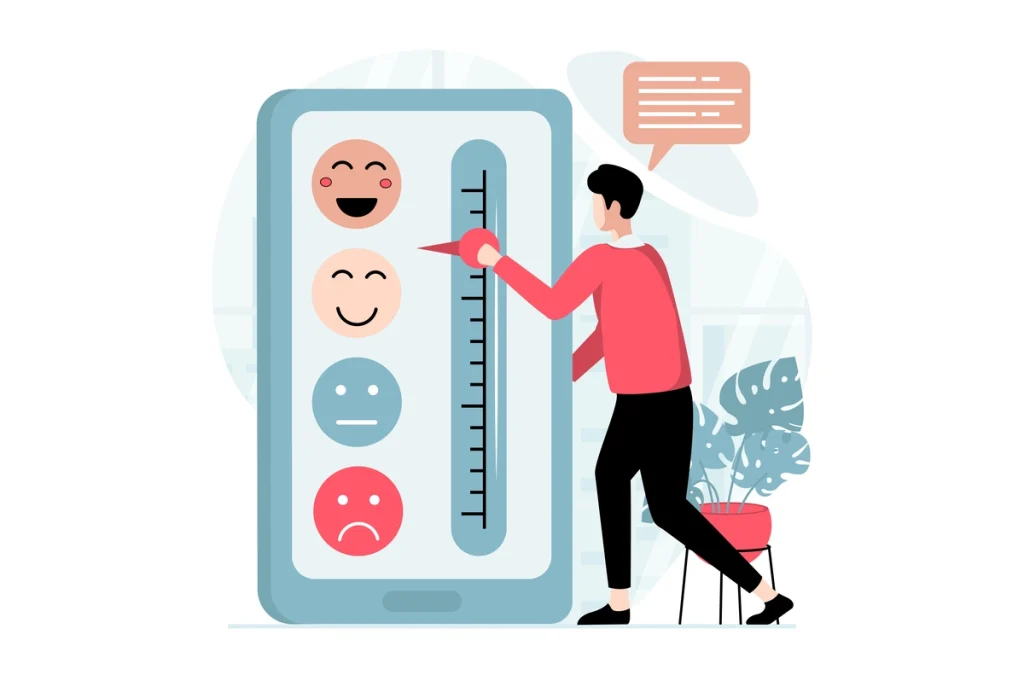
Tapping an emoji captures a moment. Reviewing trends explains behavior.
The best mood tracking app supports reflection over time, not just daily input. Emotional states gain meaning when viewed across days and weeks. Repetition reveals influence. Influence suggests adjustment.
Understanding grows when emotions stop being isolated events and start forming a narrative.
Emotional triggers rarely look like triggers
Triggers are often subtle. A certain type of day. A lack of structure. Too much interaction. Too little movement. These do not register as emotional causes in the moment. They register as mood shifts later.
Daily tracking reveals these connections without analysis. The mind recognizes patterns naturally when they are visible. This recognition is calmer and more effective than advice.
How AI adds value without replacing self awareness
Raw emotional data becomes overwhelming without context.
AI driven analysis works when it summarizes without interpreting for the user. Trends. Cycles. Shifts. Not explanations, just observations.
When insights feel descriptive rather than corrective, trust builds. Emotional understanding remains personal. Technology supports awareness instead of directing it.
Why free access changes emotional habits
Emotional awareness works best when it is informal.
A daily mood app for free allows mood tracking to stay lightweight. No commitment mindset. No pressure to perform emotional wellness. Just presence.
This casual relationship with tracking makes it easier to return on difficult days. Those are the days when insight matters most.
Mood tracking supports stress awareness indirectly
Stress rarely announces itself as stress. It shows up as impatience. Forgetfulness. Emotional flattening. Restlessness. Tracking mood makes these expressions visible before stress becomes overwhelming.
Over time, emotional data provides early signals. Responses become proactive rather than being reactive. Stress management becomes a byproduct of awareness not an extra task.
Emotional visibility strengthens support systems
Families and caregivers often sense emotional change without understanding it.
Shared mood insights offer context. Emotional shifts become observable without interrogation. Support becomes aligned instead of intrusive.
This visibility encourages empathy. It replaces guessing with understanding.
Choosing a tool that respects emotional reality
The right tool does not demand emotional fluency. It accepts uncertainty. Neutral days. Mixed feelings. Emotional ambiguity.
It allows gaps without penalty. It feels approachable, not clinical. Emotional understanding grows when the tool feels safe to use imperfectly.
Understanding emotions changes how life is navigated
When emotions are understood, reactions soften. Decisions slow down. Self judgment decreases.
Patterns replace mystery. Awareness replaces self criticism. Emotional responses become informed instead of automatic.
Over time, this reshapes mental wellbeing quietly. Not through dramatic change, but through consistent clarity.
A thoughtfully designed best mood tracking app supports this process by helping emotions become visible, understandable and familiar. When emotions are understood, they stop controlling behavior and start guiding it. That shift is where long term emotional balance takes root.


